Autodialer Laws: Complete Guide to TCPA Compliance | PowerDialer.ai
Learn everything about autodialer laws and TCPA compliance. Protect your business from fines and improve outreach. Try PowerDialer.ai, book a demo today.
Autodialer laws govern the way businesses can utilize automated dialing equipment to contact customers and leads. These are crucial to businesses that utilize robocalls, predictive dialing systems, or artificial intelligence-driven outbound marketing campaigns because non-compliance can result in heavy fines, legal action, and bad publicity. Having knowledge of these laws makes businesses ethical and most efficient at selling.
The Telephone Consumer Protection Act (TCPA) is the foundation on which these rules are established. It establishes clear boundaries on telemarketing, robocalls, and automated messages, protecting consumer privacy and enforcing accountability of businesses. Companies can stay compliant, avoid getting into trouble, and make their outreach more efficient with the correct approach.
By the end of this guide, you’ll understand how autodialer laws work, what TCPA compliance entails, the consequences of violations, and how to build compliant outbound campaigns using modern tools like PowerDialer.ai.
What Are Autodialer Laws?
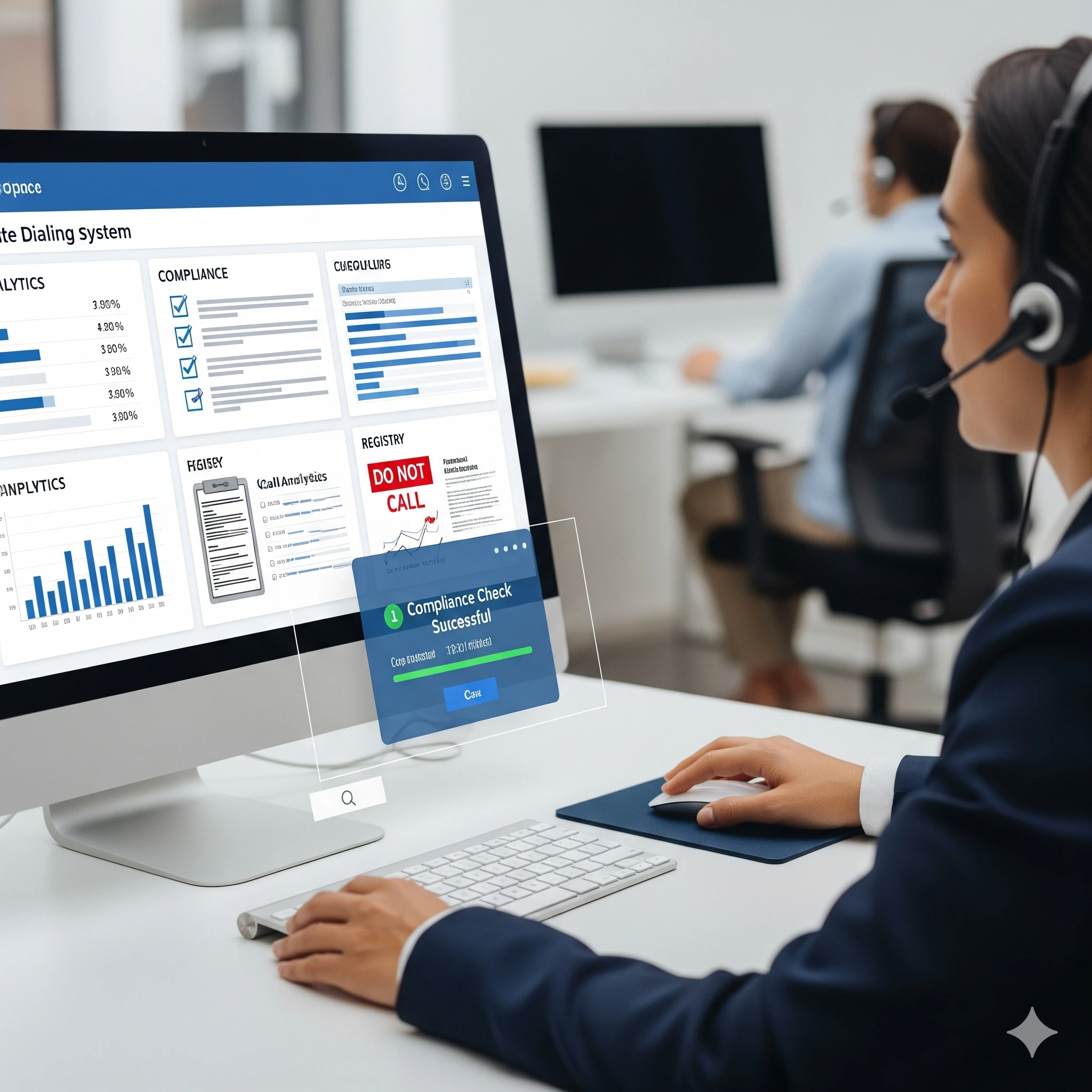
Autodialer legislation is legal that governs the use of automatic dialing machines and pre-recorded voice calls to reach consumers or companies. The legislation was meant to curb spam, protect privacy, and assist marketing and sales professionals in maintaining ethical calls.
Why Autodialer Rules:
- Shield consumers from unwanted robocalls and unwanted messages.
- Encourage businesses to utilize open telemarketing business practices.
- Impose strict consent practices for automated calling.
- Lower harassing or illegal dialing lawsuits.
Real-World Example: In 2020, a major telecommunications company paid over $2 million in fines for TCPA regulation infractions by calling numbers on the do-not-call (DNC) list. The case points to the importance of strict compliance.
Types of Dialers
1. Predictive Dialers
Predictive dialers are auto-dialing systems that automatically dial multiple numbers and connect the answered calls to available representatives. Predictive dialers use algorithms to predict agent availability and maximize call efficiency. Predictive dialers are used by large call centers traditionally, and they reduce idle time for reps and overall call volume. Predictive dialers, however, must be properly in compliance with autodialer laws to avoid TCPA violations.
Pros:
- Maximizes productivity for agents through reduced downtime.
- Manages high-volume outbound campaigns efficiently.
- Can be utilized with CRM tools to enhance tracking.
Cons:
- Increased risk of TCPA violation if consent is not tracked.
- Requires elaborate setup and training.
- Potentially have the ability to overburden agents unless managed.
2. Power Dialers
Power dialers call numbers one at a time down the line, proceeding automatically to the next contact when the previous call has been finished. In contrast to predictive dialers, they are ideal for small, targeted lists where quality of interactions takes precedence over quantity. Sales teams use them to work through hand-routed leads efficiently with personal outreach maintained.
Pros:
- Faster than manual dialing, saving agent time.
- Better suited to targeted and quality-oriented campaigns.
- Removes human error in dialing.
Cons:
- Slower than high-volume campaign predictive dialers.
- Still might require consent tracking to be TCPA compliant.
- Less sophisticated analytics than predictive systems.
3. Robocalls
Robocalls are automated pre-recorded messages to numerous individuals. They are usually sent as reminders, notifications, or advertisement campaigns. Express consent must be obtained before sending robocalls, and accurate caller and purpose disclosures are to be made. Misuse will lead to severe penalties under TCPA law.
Pros:
- Reach numerous individuals quickly and efficiently.
- One message for all.
- Suitable for reminders, notifications, or advertising.
Cons:
- High risk of legal violations in case consent is not there.
- Could offend recipients and hurt brand image.
- Low capability to personalize interactions.
Each form of dialer has its own set of rules, so knowing your gear is vital to stay in compliance.
Knowing TCPA Compliance
Telephone Consumer Protection Act (TCPA), enacted in 1991, governs robocalls, texts, and automated messages. Intended to safeguard consumer privacy while permitting valid marketing efforts, TCPA compliance is not voluntary, noncompliance can bring expensive lawsuits and reputational damage.
Important Points Regarding TCPA:
- Regulates companies that initiate automated calls or automated messages.
- Involved in both B2B and B2C efforts in most instances.
- Ensures that businesses obtain legitimate express written consent before dialing cell phones.
- Establishes call time standards, DNC list maintenance, and required disclosures.
Example: A B2B SaaS company using autodialers to make business cold calls must obtain advance permission to call cellular phones, even for business purposes.
TCPA Autodialer Definition
The FCC has defined an autodialer as any piece of equipment capable of storing or producing telephone numbers to dial automatically, at times through random or sequential number generation.
Manual vs. Autodialing:
Manual dialing brings a person to the point of having to manually dial each number.
Autodialing is capable of dialing hundreds of contacts within minutes, which prompts TCPA compliance measures.
Why: This definition matters because it will determine if your outreach tools are federally regulated and subject to consent tracking.
Critical TCPA Regulations for Autodialers
To remain compliant, business must follow:
Written Consent: Required for mobile phone calls or prerecorded messages.
Call Time Restrictions: Only allowed between 8 a.m. and 9 p.m. local time.
Do-Not-Call Compliance: Clean numbers against the national DNC list and maintain internal suppression lists.
Disclosures: Pre-recorded messages must clearly state caller identity and purpose.
Tip: Always have records of consent, call attempts, and call times to protect your business from possible lawsuits.
Autodialer Law Violation Penalties
Violating autodialer laws comes with heavy penalties, in dollars as well as public opinion.
Penalties Include:
Fines: $500–$1,500 per call, depending on intent and severity.
Lawsuits: Consumers can file class-action lawsuits.
Reputation Damage: Negative publicity and loss of trust can impact sales and client relationships.
Case Study: A company was forced to shell out a $4 million fine for repeated robocall violations in which it failed to accurately monitor consent. The monetary loss and loss of reputation highlight the importance of strict adherence to TCPA rules.
How Companies Can Remain TCPA Compliant
Get Rightful Consent
Consent is the bedrock of TCPA compliance:
Express Written Consent: Mandatory for pre-recorded or auto-dialed calls to cell phone numbers
Implied Consent: May be used in existing customer relationships but must always be documented.
Enforce and Obey the Do-Not-Call List
- Clean contacts against the national DNC list regularly.
- Maintain internal suppression lists for opted-out numbers.
- Update your contact lists on a quarterly basis to avoid stale or obsolete numbers.
Use TCPA-Compliant Dialing Equipment
Today’s sales teams use technology that automates the reach while being compliant.
PowerDialer.ai – AI-driven auto-dialer with CRM integration:
- Automatically follows call consent and opt-outs.
- Offers analytics to measure engagement and improve outreach.
- Helps maintain compliance with all outbound calling laws.
Pros:
- Reduced manual dialing errors.
- Automatically compliant.
- Includes integration with CRMs for integrated data.
- Increases efficiency in outreach.
- Triggers all consent and opt-outs.
Cons:
- Requires setup and training upfront.
- Premium subscriptions can be required for some features.
- Internet-based functionality.
- AI-driven recommendations need human oversight.
- Smaller groups might not need all functionality.
Other Tools:
ZoomInfo: Solid B2B database; integration-capable.
Apollo.io: Affordable lead enrichment and sequence management.
LinkedIn Sales Navigator: Relationship-based prospecting fits it best.
Train Sales and Marketing Teams
- Maintain regular training in FCC regulations and TCPA rules.
- Have distinct in-house procedures for recording consent.
- Maintain personnel up to date with new evolutions of outbound calling legislation.
Common Myths About Autodialer Laws
Manual dialing is exempt: False; mobile numbers remain under consent.
B2B calls are exempt: False; rules apply depending on purpose and consent.
Consent lasts forever: False; consumers can withdraw or revoke consent.
TCPA Autodialer Compliance Best Practices
- Segment Contacts: Store consented and non-consented numbers in different.
- Keep Records: Retain consent, time of call, and opt-outs.
- Regular Audits: Monitor outbound calls to determine compliance shortcomings.
- Utilize AI Tools: Automatically mark high-risk calls.
- Multi-Channel Outreach: Combine calls with emails to relieve call pressure.
Voicemail Apps & Autodialer Integration
PowerDialer.ai Voicemail Drop
PowerDialer.ai allows sales teams to automatically drop pre-recorded voicemails and retain compliance with consent rules. The platform tracks engagement metrics and integrates seamlessly with your CRM, offering actionable follow-up insights. Ideal for teams who want to save time on repeated calls and remain TCPA-compliant.
Pros:
- Saves time with automated voicemails.
- Tracks call consent and engagement.
- Ensures TCPA-compliant outreach.
Cons:
- Premium features require a premium plan.
- Can have an initial training requirement for new users.
Slybroadcast
Slybroadcast sends voicemail drops to cell phones without ringing, which is best for reminders or campaigns. It comes integrated with several CRMs, allowing teams to maintain contact data free of clutter as they expand outreach. It is simple to use for the users who need speedy, automated voicemail drops.
Pros:
- Rapid and scalable voicemail drops.
- CRMs integrated.
- Best for reminders or campaign-type communications.
Cons:
- Limited metrics for engagement.
- Not so suitable for highly personalized campaigns.
PhoneBurner
PhoneBurner combines click-to-call with automated voicemail funnels, making it easier for sales teams to make outreach. Its clean interface allows for quicker dialing and leaving voicemails, and CRM integration keeps track of everything with ease. It’s ideal for small to mid-size teams doing high-touch follow-ups.
Pros:
- Simple user interface.
- CRM integration for better data management.
- Simple call and voicemail tracking.
Cons:
- Can be expensive for big teams.
- Limited advanced reporting compared to enterprise solutions.
Groove Voicemail
Groove Voicemail is specifically built for Salesforce users with customized voicemail sequences and workflow automation. It is effective with voicemails as a part of more extensive campaigns and response tracking. Best for teams already heavily utilizing Salesforce.
Pros:
- Custom workflows and sequences.
- Personal voicemails encourage engagement.
- Strong Salesforce integration.
Cons:
- Steeper learning curve.
- Requires Salesforce know-how to access max features.
CallTools Voicemail Drops
CallTools Voicemail Drops is cloud-hosted automated, campaign-ready voicemail. It’s cost-effective and reliable, allowing teams to execute huge voicemail campaigns with minimal setup. Suitable for businesses that need an easy solution without cumbersome infrastructure.
Pros::
- Cost-effective and reliable.
- Cloud-hosted for easy access.
- Automated campaign ready.
Cons:
- Fewer analytics than other providers.
- Fewer possibilities for personalization.
Conclusion
Autodialer regulation is critical to protect consumers and companies. TCPA compliance prevents penalties, litigation, and preserves trust while allowing scalable, effective sales contact. Tools like PowerDialer.ai allow automated dialing without violating federal regulations, which empowers teams to function effectively and ethically.
Stay compliant and expand outreach with PowerDialer.ai, the AI-powered, TCPA-compliant auto-dialer integrated with your CRM.
FAQs
Q1. What is TCPA and why does it matter?
Governs autodial calls, robocalls, and telemarketing to ensure consumer privacy.
Q2. Do autodialer laws cover B2B sales calls?
Yes, depending on consent and purpose of the call.
Q3. What if my company violates autodialer laws?
Fines of $500–$1,500 per call, litigation, and damage to reputation.
Q4. Can prerecorded messages be sent under TCPA?
Yes, only with advance express written consent.
Q5. What tools aid in TCPA compliance?
PowerDialer.ai, ZoomInfo, Apollo.io ensure automatic dialing complies and tracks consent.
Try it on your own list
Per-seat pricing, published, with no seat minimum. See the pricing.