SIP vs VoIP: Understanding the Key Differences | PowerDialer.ai
SIP vs VoIP: Understand key differences for business communications. Learn which is best for voice, video, & messaging to streamline your operations eff...
Back when I first started working with small businesses on their communication setups, the most common question I heard wasn’t about cost; it was confusion around terms like “SIP,” “VoIP,” and how the two fit together.
People would say things like:
“I think we need VoIP? But the provider mentioned SIP trunking, and now I’m lost.”
And honestly, I get it. Telecom terms can feel like alphabet soup when you’re just trying to figure out how to answer your phones without breaking the bank.
So let’s clear things up. Here’s what you need to know about what VoIP and SIP are, how they work together, and the actual difference between SIP and VoIP, explained like you’re having a coffee with someone who’s done this for a while.
What Is VoIP?
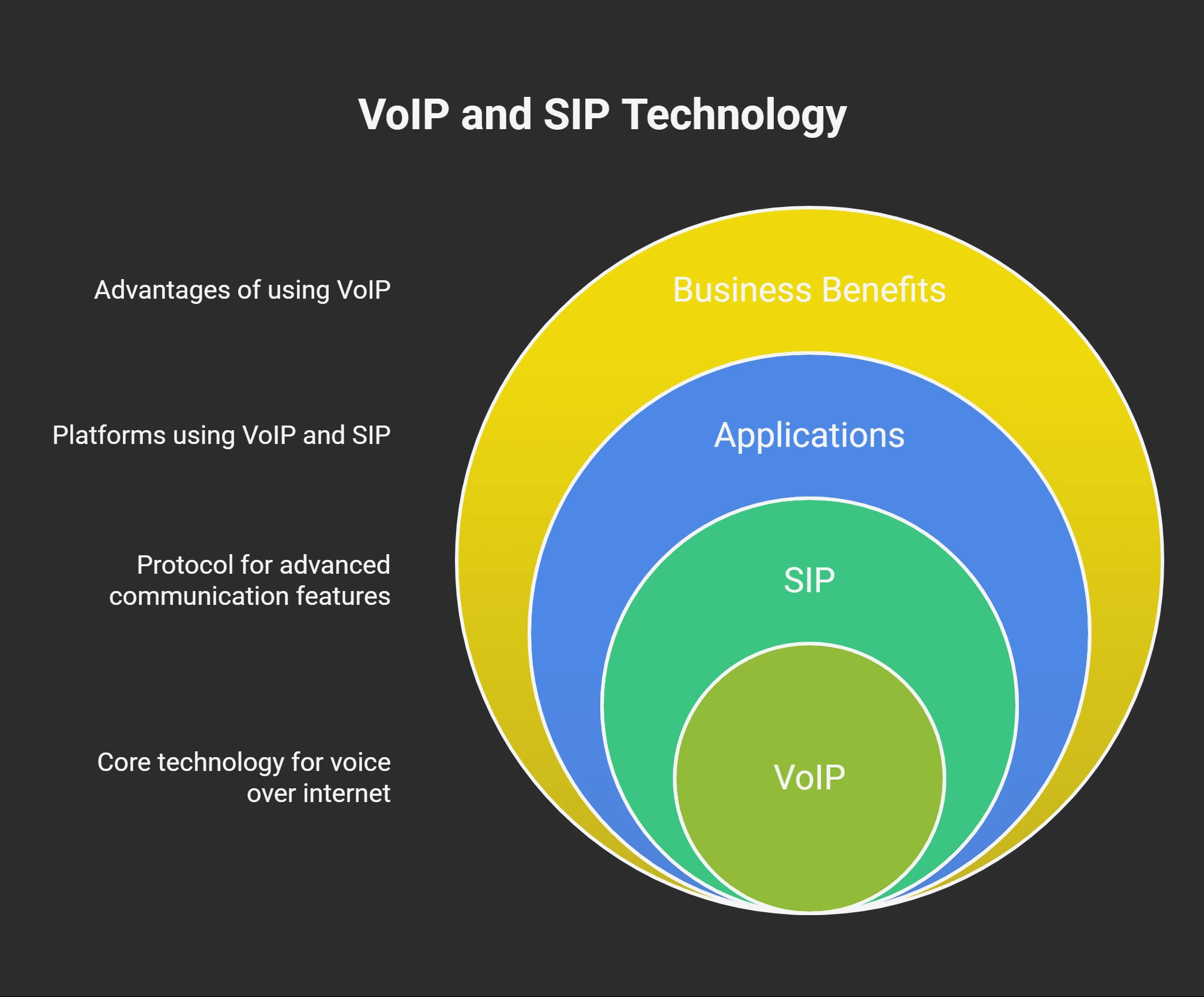
Let’s not overcomplicate it. VoIP just means voice over internet protocol. In other words, you’re making phone calls over the internet instead of traditional copper phone lines. That’s it.
You’ve probably already used VoIP without even realizing it, WhatsApp calls, Skype, Zoom phone, etc., they all use VoIP behind the scenes.
Businesses love VoIP because:
- It’s affordable, especially for long-distance.
- You don’t need a landline or bulky desk phones (unless you want them).
- It’s flexible, you can make calls from anywhere, as long as you have the internet.
But VoIP by itself is just the foundation. It gets the voice call from point A to point B. If you want more than just calling, say video meetings, internal chat, call routing, or CRM integration, you’ll need something else layered on top.
That’s where SIP comes in.
What Is SIP (And Why Should You Care)?
SIP stands for Session Initiation Protocol. It’s not a product. It’s a rulebook, a way for devices to “talk” and coordinate how a call, or any multimedia session, is handled.
To keep it simple: SIP is what makes VoIP systems smart.
It tells your system how to:
- Start and end calls
- Add more people to a call
- Turn a voice call into a video call
- Transfer the call to another device
- Send messages alongside your voice or video
So, when someone talks about SIP-based VoIP services, they’re talking about a setup where SIP is used to power a more complete communication experience, voice, video, messaging, and more.
Why VoIP Alone May Not Be Enough in 2025
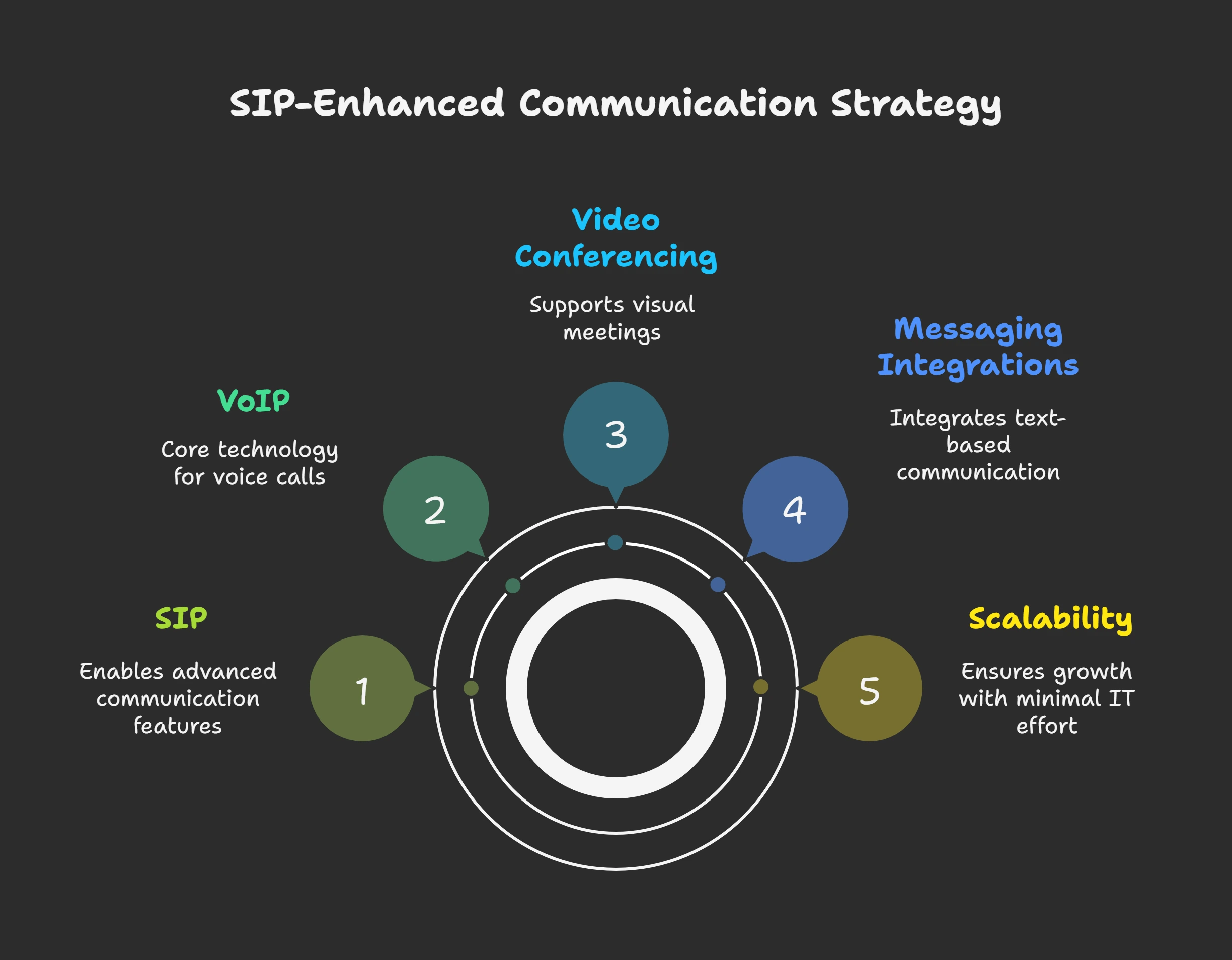
As businesses grow, communication needs go beyond just voice calls. VoIP on its own is great for cutting costs, but modern teams need to do more than talk. They need to meet, message, collaborate, and share.
That’s where SIP-based VoIP services stand out. The difference between SIP and VoIP isn’t just technical; it’s about how complete your communication strategy is.
If your VoIP provider doesn’t support SIP, you’re likely missing out on features like:
- Video conferencing
- Messaging integrations
- Call transfers between devices
- Scalability with minimal IT work
So if you’re still asking what VoIP and SIP are, think of them as teammates: VoIP connects the call, SIP adds the intelligence.
The Difference Between SIP and VoIP (Plainly Put)
Here’s the simplest way to think about it:
- VoIP is the technology that allows calls over the internet.
- SIP is one way to control those calls and add more features.
SIP enables VoIP to do more than just voice.
You could run a basic VoIP service without SIP, but you’d be limited. Once you bring SIP into the picture, you can build out a full-blown unified communication system.
I’ve worked with businesses that started with basic VoIP to save money, then upgraded to VoIP SIP systems when their needs evolved, including remote teams, internal video meetings, or handling multiple call queues.
Real Talk: Why SIP-Based VoIP Services Are Gaining Popularity
Let’s say you’re running a small but growing business. You want your sales team to take calls on the road, have internal chat, and host weekly video check-ins, all without buying 5 different tools.
That’s exactly what SIP-based VoIP services give you.
They tie everything into one system: phones, video, messaging, voicemail, and even integrations with tools like Slack or HubSpot.
One of my clients, a property management firm with 20 employees across 3 states, was juggling mobile phones, Zoom, email, and spreadsheets. We helped them shift to a SIP-powered VoIP system, and within two weeks:
- They were handling all communications from one app.
- Their team stopped missing client calls.
- Their IT guy ( the owner’s nephew) could finally sleep at night.
Sometimes the value isn’t just in saving money, it’s in not needing 5 different apps just to talk to people.
What Is VoIP SIP in Action?
Let’s put the concept into context.
You sign up for a VoIP SIP platform. Now your receptionist can:
- Answer calls at the office
- Transfer calls to a rep working from home
- Add a manager to the conversation
- Escalate the call to a video session if needed
All without switching apps or calling back later.
This is where VoIP and SIP shine together. On their own, they’re useful. Combined? They give your business communication superpowers.
Should You Switch?
Here’s how I usually advise clients:
- If you only need voice calls and have a tight budget? VoIP alone might be enough.
- If you want your phone system to evolve as your business grows, or if you’re managing remote teams? Go with SIP-based VoIP services from the start.
Also, check what you already have. Some phone systems technically use SIP behind the scenes, even if your provider never mentions it.
And remember: the difference between SIP and VoIP matters when it comes to flexibility, integrations, and future-proofing.
Is SIP Only for Big Companies?
It’s a common myth that SIP-based VoIP services are only useful for big enterprises. In reality, they’re one of the best solutions for small and medium businesses.
Why?
Because SIP scales up and down easily. Whether you’re a five-person law firm or a 100-seat call center, SIP gives you:
- Centralized management
- No expensive hardware
- Remote-friendly communications
- Future-proofing for expansion
One of our clients, a boutique travel agency, switched to SIP-based VoIP and immediately cut admin time managing three tools just for communication. It’s efficient, and the learning curve is surprisingly gentle.
A Few Honest Watch-Outs
Even the best tech has drawbacks. VoIP and SIP rely on your internet connection. If your network is slow or drops regularly, no phone system in the world is going to fix that.
Also, emergency calling (like 911) works differently with VoIP. You’ll need to make sure your provider registers your correct location.
And lastly, security. You’ll want a provider that supports encryption (like TLS and SRTP) and knows what they’re doing with firewalls and network protection.
Comparing SIP Trunking vs Hosted VoIP
SIP Trunking vs Hosted VoIP
| Feature | SIP Trunking | Hosted VoIP |
|---|---|---|
| What is it? | Replaces traditional phone lines using SIP | Cloud-based VoIP phone service |
| Flexibility | Very flexible, works with existing PBX | Less control, but easy setup |
| Cost | Lower for larger teams | Predictable monthly cost |
| Best for | Mid to large companies with on-site PBX | Startups, remote teams, or no IT team |
Conclusion:
Still trying to figure out what VoIP and SIP are and which one suits your business?
Start with this:
- If your current phone system feels limited or clunky
- If your team is using 3–4 tools just to communicate
- Or if you’re planning to grow in the next 6–12 months
It’s worth exploring SIP-based VoIP services. Not only do they give you more features, but they also give you the flexibility to adapt as things change.
Talk to a provider who can explain how SIP works with your current system. Not all VoIP is created equal.
FAQs
1. What’s the difference between SIP and VoIP?
Think of VoIP as just calling over the internet. That’s it. Now, SIP? It’s the part that makes those calls smarter. It lets you add videotape, communication during a call, or transfer the discussion between bias. One gets the job done, the other makes it better.
2. Can I use VoIP without SIP?
Yeah, you can, but you’ll only get introductory phone call functionality. However, fine, if that’s all you need. But if you want to gauge, or do further than just voice calls, you’ll hit limits presto without SIP.
3. What do people use VoIP SIP for?
It’s what makes ultramodern work possible. Voice calls, videotape exchanges, platoon messaging, and screen sharing. VoIP SIP packets all of it into one system. Perfect for mongrel or remote brigades who need to stay in sync.
4. Are SIP-based VoIP systems secure?
They can be, yes, but it depends on the setup. However, you’re safe if your provider uses proper encryption and firewall rules. But don’t skip security, this stuff runs over the internet, after all.
5. When does it make sense to use VoIP and a SIP together?
Still, it’s time, if you’re running a growing platoon or you’re tired of switching between 4 different apps to get work done. SIP adds the flexibility and features of VoIP to keep up with how people work now.
Try it on your own list
Per-seat pricing, published, with no seat minimum. See the pricing.