What is a Sales Development Representative (SDR)? Guide | PowerDialer.ai
Learn what a Sales Development Representative (SDR) does, key skills, career path, and tools. Boost your sales team\u2019s success, book a demo today!
Have you ever received a call or email from a company and thought, “Who’s reaching out to me?” More often than not, it’s a Sales Development Representative (SDR). From my time in sales, I’ve seen SDRs work tirelessly behind the scenes, filling pipelines, qualifying leads, and making life easier for account executives (AE). Without them, AEs would be stuck chasing leads that go nowhere, and sales numbers would drop.
In this guide, I’ll break down the SDR role in sales, what SDRs actually do day-to-day, the skills that make them successful, the challenges they face, and the tools that help them shine. Whether you’re starting a career in sales or building a team, this guide is for you.
Introduction to the SDR Role
Why SDRs Are Vital

Imagine a sales team with no SDRs. The AEs would spend hours dialing numbers, sending emails, and chasing leads, most of which aren’t ready to buy. It’s exhausting and inefficient. SDRs act as the first line of contact, they find potential clients, qualify them, and schedule meetings. In other words, they make sure AEs spend time where it counts.
I remember a team I worked with where the SDRs were able to schedule over 50 qualified meetings in a single week, giving AEs a clear path to close deals without wasting time. That’s the power of a well-functioning SDR team.
SDRs are sometimes called inside sales representatives, and they play a key role in keeping the sales pipeline full. Companies that invest in SDRs see faster growth, higher lead conversion, and better ROI.
How SDRs Fit Into the Sales Process
Marketing generates leads, but not all leads are ready to buy. SDRs step in to qualify these leads, nurturing them until they are ready for the AEs.
Let’s say your marketing team generates 200 leads a week. Without SDRs, AEs would waste countless hours calling leads that aren’t interested. SDRs filter, nurture, and schedule meetings, ensuring that every lead moving to the AE is high quality. This keeps the sales pipeline organized and productive.
What Does a Sales Development Representative (SDR) Do?
Key Responsibilities
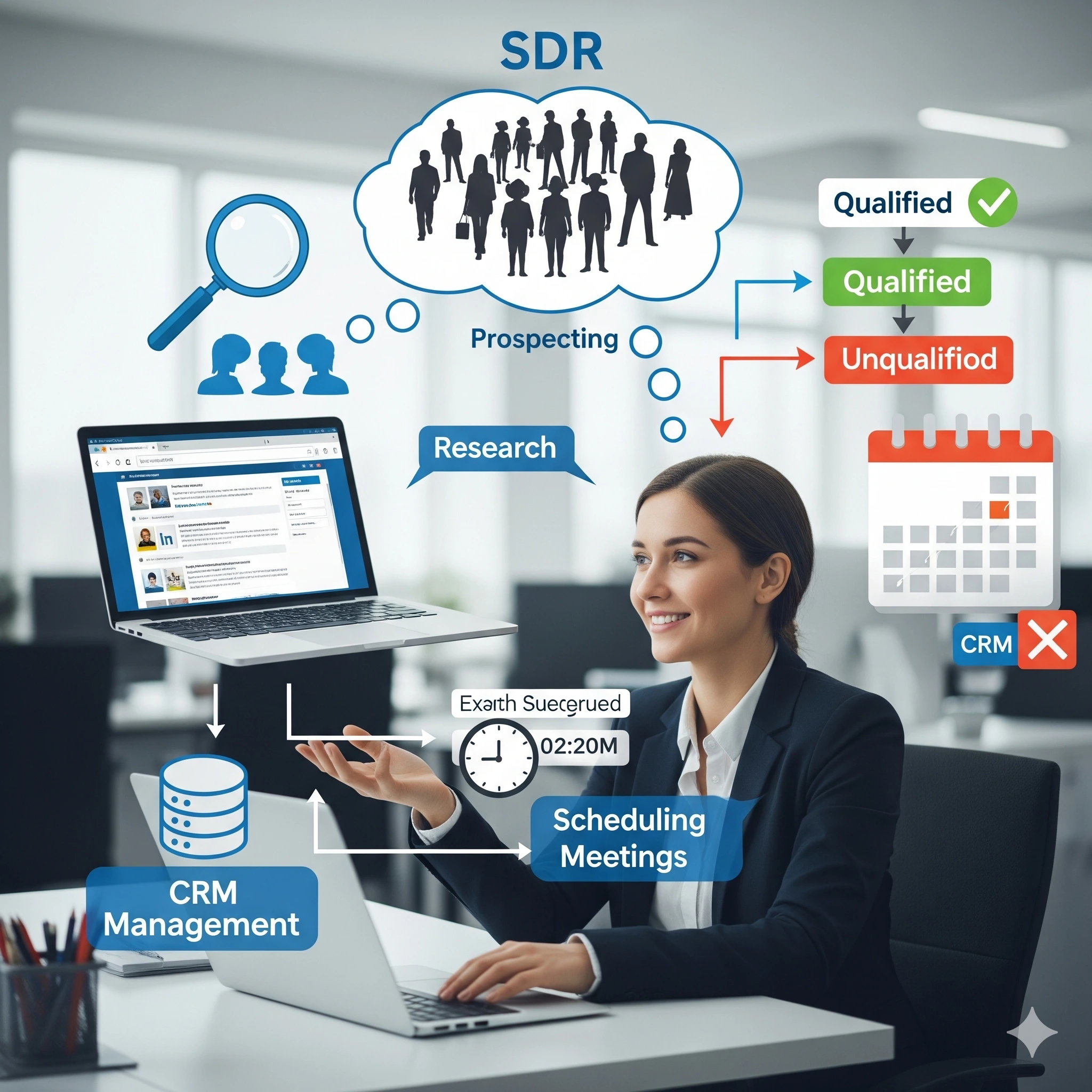
A Sales Development Representative (SDR) has several core responsibilities:
- Prospecting: Finding potential clients through cold calling, prospecting, emails, and social media
- Research: Understanding the prospect’s business, industry, and pain points
- Lead Qualification: Determining if a lead is ready for a sales conversation
- Scheduling Meetings:Booking demos or calls foraccount executives (AE)
- CRM Management: Recording all interactions in sales tools and CRM platforms
In short, SDRs ensure that AEs spend their time only with leads that matter, keeping the sales pipeline clean and efficient.
Day-to-Day Tasks
Prospecting and Outreach
Prospecting is the backbone of an SDR’s work. They find potential clients, reach out, and start conversations. Not every contact converts, but each interaction builds a relationship and brings prospects closer to becoming clients.
Lead Qualification and Nurturing
Not every lead is ready to buy immediately. SDRs ask the right questions, identify pain points, and nurture leads over time. This way, by the time they hand off to an AE, the lead is warm and ready for a conversation.
Scheduling Meetings for Account Executives
Once a lead is qualified, SDRs schedule a demo or call with an AE. This ensures AEs can focus on closing deals rather than chasing leads that aren’t ready.
Skills Every SDR Needs
Communication and Active Listening
SDRs must communicate clearly and listen carefully. Explaining your product is only half the job, you need to understand the prospect’s needs to create value.
Resilience
Rejection is part of the job. SDRs hear “no” a lot. Staying motivated and learning from each interaction is crucial.
Research and Lead Qualification
A good SDR knows how to research a company quickly, identify pain points, and qualify leads. This keeps the sales pipeline strong and helps AEs focus on real opportunities.
CRM and Sales Tools Proficiency
Modern SDRs rely on CRM platforms and sales tools like PowerDialer.ai to stay organized, automate repetitive tasks, and improve connect rates. I’ve personally seen SDR teams double their efficiency just by using the right tools.
SDR vs BDR: Understanding the Difference
People often confuse SDRs and BDRs, but they serve different purposes:
- SDRs: Focus on qualifying leads and setting meetings
- BDRs: Focus on strategic growth, partnerships, and market expansion
If you’re starting in sales, SDR roles are perfect. You’ll learn cold calling, prospecting, and pipeline management. BDR roles are more strategic and long-term focused.
Career Path of a Sales Development Representative
Entry-Level Opportunities
Most SDRs start in entry-level sales roles, learning how to manage leads, prospect efficiently, and keep the sales pipeline healthy.
Moving to Account Executive (AE)
After gaining experience, SDRs often move into AE roles, handling deal closing and client management. This is where the efforts of SDRs pay off, they see the leads they nurtured turn into real revenue.
Leadership Roles
Top-performing SDRs can move into leadership positions, managing SDR teams, designing outreach strategies, and ensuring a high-performing sales pipeline.
Challenges SDRs Face
- High Rejection Rate: Hearing “no” is normal. Resilience is key.
- Time Management: Balancing calls, follow-ups, and CRM updates can be overwhelming.
- Staying Motivated: Celebrating small wins helps maintain morale in a competitive environment.
Tools and Technology That Help SDRs
CRM Platforms
CRMs like Salesforce, HubSpot, and Pipedrive help SDRs track leads and interactions efficiently.
Sales Engagement Tools
Automation tools allow SDRs to send personalized emails and follow-ups. PowerDialer.ai makes calling faster, tracks results, and boosts efficiency.
Dialers and Outreach Software
Automated dialers help SDRs reach more prospects and keep the sales pipeline active.
Tip: Using PowerDialer.ai can dramatically improve your SDR team’s productivity, book a demo today!
Why Companies Invest in SDR Teams
- Better Lead Conversion: AEs spend time with qualified leads
- Stronger Sales Pipeline: Leads are nurtured early and efficiently
- Higher ROI: Streamlined processes save time and increase revenue
Conclusion
A Sales Development Representative (SDR) is essential for any sales team. From prospecting and cold callingtolead qualification and scheduling meetings, SDRs ensure the sales process runs smoothly. If you’re building a team or starting a career, understanding the SDR role in sales is critical.
Boost your SDR team’s productivity with PowerDialer.ai, book a demo today!
“Looking to build a high-performing SDR team? Streamline your outreach and maximize sales efficiency with PowerDialer.ai. Book a demo now.”
FAQs
Q1: What is a Sales Development Representative (SDR)? An SDR handles prospecting, lead qualification, and scheduling meetings for AEs.
Q2: What does an SDR do daily? They research prospects, make cold calls and outreach, qualify leads, nurture them, and track activity in CRMs.
Q3: What skills make a successful SDR? Communication, resilience, research, lead qualification, and CRM and sales tools proficiency.
Q4: How is an SDR different from a BDR? SDRs focus on lead qualification and meetings, while BDRs handle strategic growth.
Q5: Is SDR a good entry-level sales job? Yes. It teaches cold calling, prospecting, and pipeline management, perfect for beginners.
Try it on your own list
Per-seat pricing, published, with no seat minimum. See the pricing.